







LET'S START WITH THE BASICS
Are neurodivergent and neurotypical brains actually different?
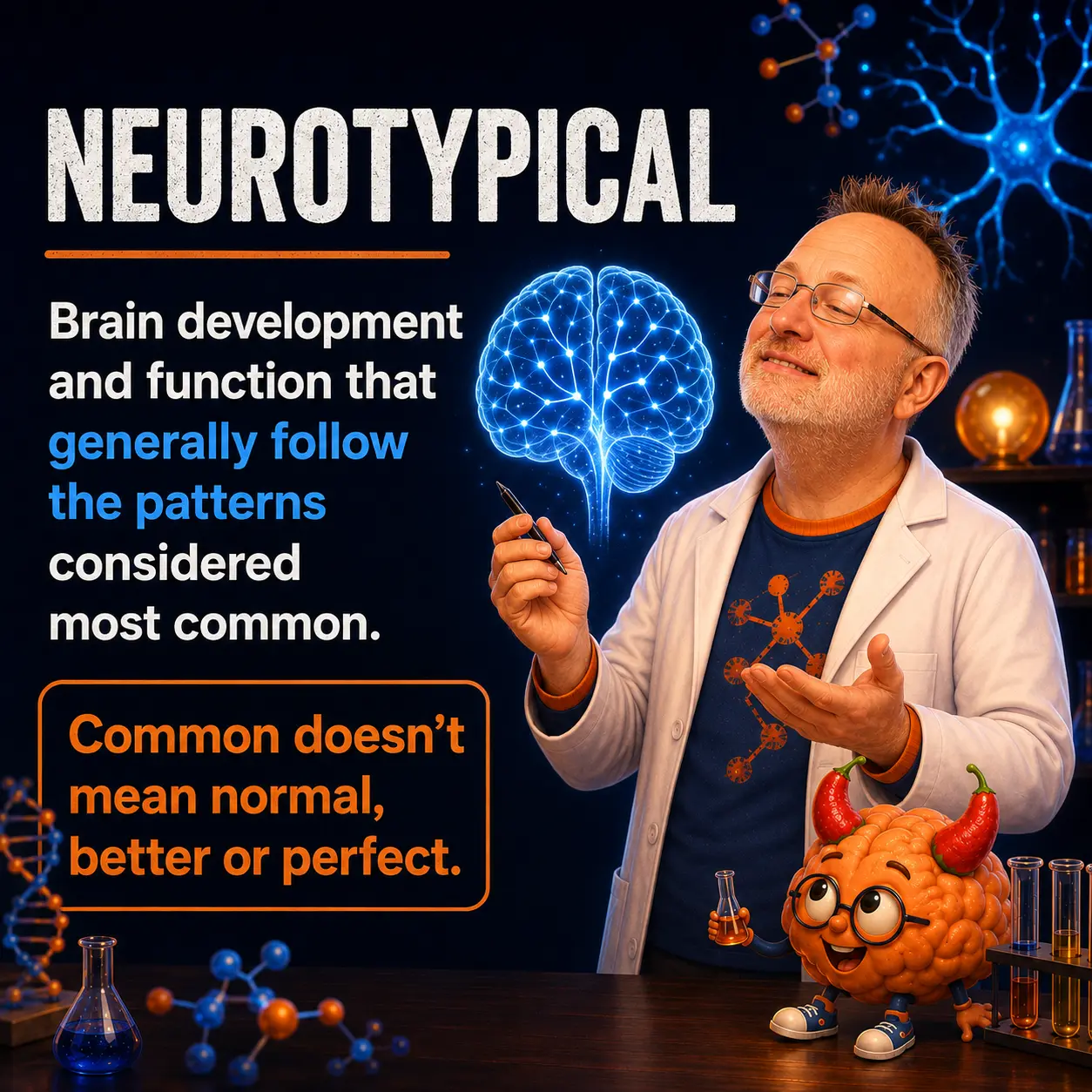
Neurotypical describes people whose development and brain function generally follow the patterns considered most common.
Neurotypical people may find it easier to:
- Recognize and follow common social expectations
- Adapt to standard routines and environments
- Show a more even range of abilities on certain assessments
That doesn’t mean “normal,” better or perfect. It’s simply one valid way of experiencing the world.
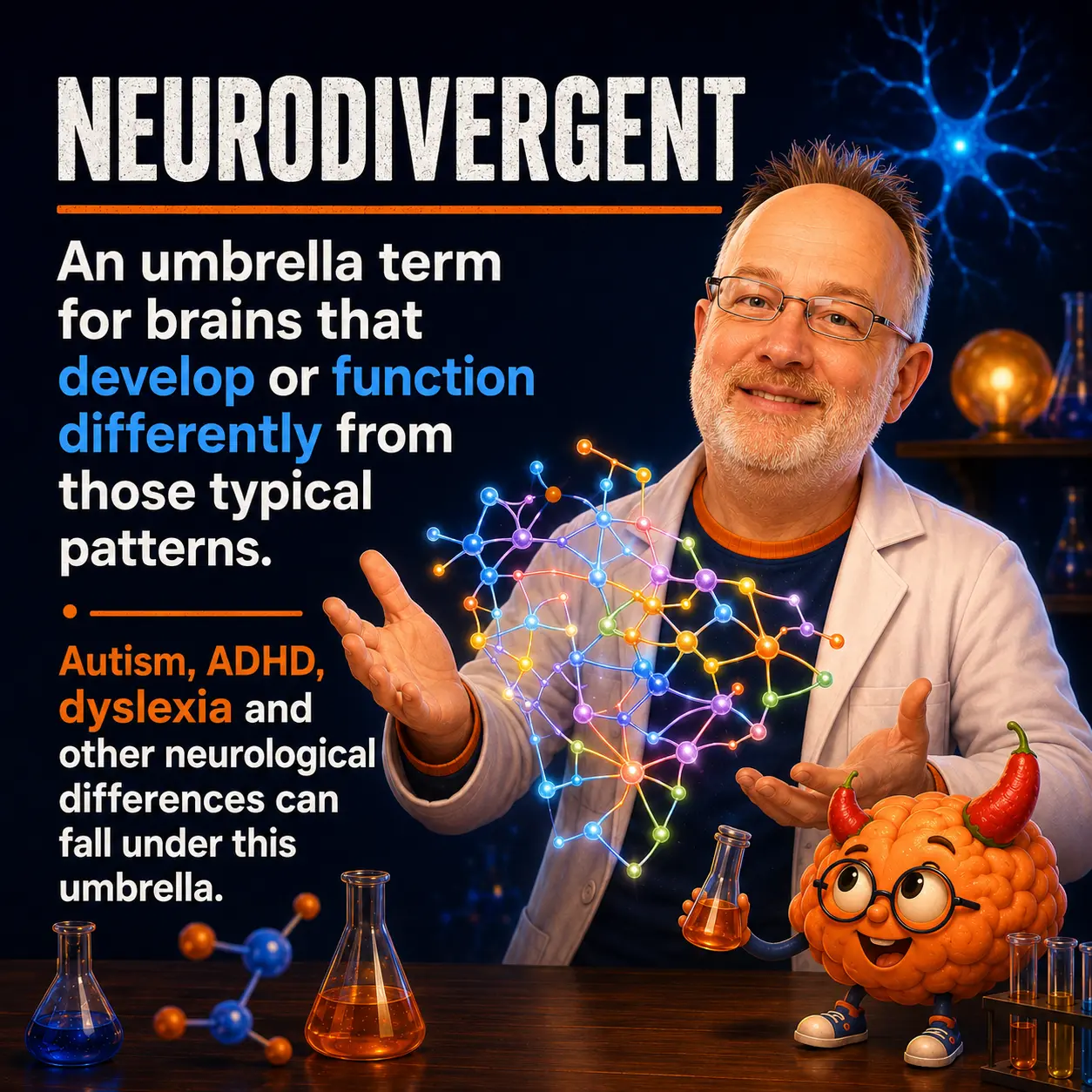
Neurodivergent is an umbrella term for people whose brains develop or function differently from those typical patterns. It can include autism, ADHD, dyslexia, dyspraxia, dyscalculia, Tourette syndrome and other neurological differences.
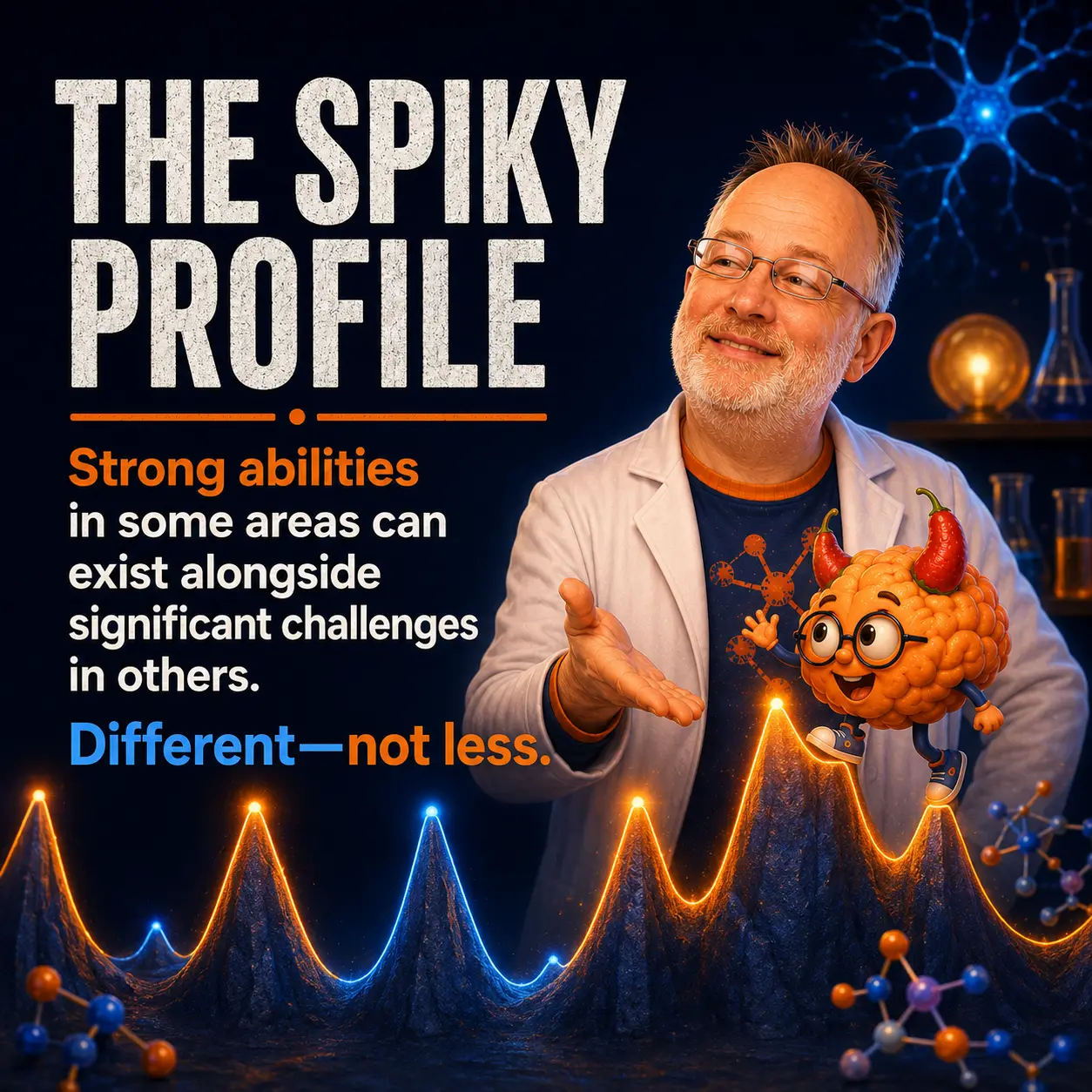
Neurodivergent people sometimes have a spiky profile: unusually strong abilities in some areas alongside significant challenges in others.
But what is happening inside the brain?
Science nerds start talking about developmental timing, neural connectivity, synaptic pruning, sensory processing and executive function.
What does all that actually mean?
If you want, Pops will break it down—with neurons, proteins and mathematical equations that look like alien writing.
You know…the same equations they probably used to build the pyramids.
But I digress.
Wanna know more?
Keep it spicy!